Showing posts with label atheism/agnostic. Show all posts

Friday, June 14, 2013

talking to people of faith.

A few things.

First, this article by professor Michael J. Stevens on his studies of elevated passive aggressive behavior in Mormons raised on the Wasatch Front:

"As I began to teach my usual rotation of courses using the BDQ, I noticed a striking trend with my students along the Wasatch Front—occurring with undergraduate and graduate (MBA) students, and with males and females. The preference for the avoidance style of conflict resolution was surfacing at a significantly higher rate than I had seen in the Midwest and Texas... Passive-aggression is the least common response option to conflict among the U.S. population at large and is typically viewed as an inadequate and unconstructive strategy (at least over the long term). It is generally used by those who would prefer that the conflict simply go away... In its milder forms, passive-aggression will manifest itself merely as polite and innocuous attempts to steer clear of uncomfortable topics or encounters with others. However, in its more insidious forms, passive-aggression can rise to a level of interpersonal hostility and contempt that embodies a “whatever” response to the views and opinions of others... The presence of significantly elevated levels of passive-aggression among the LDS population born and raised along the Wasatch Front deserves some analysis." ~read more

Then in the SFF community, This open letter from Nancy Fulda about feeling discriminated against for being Mormon:
"In a recent conversation with other authors who are practicing a religious faith, it became apparent that many of us feel social pressure to hide our beliefs. I’m not talking about common politeness and self-censoring during conversations at conventions and on the internet. That’s a no-brainer. I hope anyone who’s met me in person can testify that I’m not the kind of jerk who goes around rubbing other people’s noses in her opinions. I’m talking about something else. I’m talking about feelings of rejection because of who we are and what we believe — independent of any specific actions we have taken. Feelings of invalidation and dehumanization. Fear of being ridiculed or publicly dogpiled if we allow our religious affiliations to be known..... I realize that many people within SFF have had horrible experiences with members of organized religions. I am not those people who mistreated you. Please do not treat me as if I were. Once we have gotten to know each other, you may conclude that I am a despicable person, or you may decide that I am actually quite reasonable. I can deal with either option, but please do not reduce me to a stereotype." ~read more

A response from Keffy Kehrli:

"Basically, it’s religious intolerance unless I remain completely polite in all instances, no matter what someone says? It’s religious intolerance if I emphatically distance myself from any single tenet of what someone believes? Fuck that.....If you want to start dialogue with, “I want to discuss this but refuse to change any aspect of my faith,” then why the fuck should I participate? What’s in it for me, except a gradual wearing down of my defenses until I smile pretty and agree that why yes anything you say is totally acceptable regardless of any potential harm it may do to others?... Wow, it must be really nice to be so privileged that as long as nobody raises their voice, you feel welcome and comfortable. That must be fucking amazing. You know what makes me feel unsafe in a space? When someone rolls out some bullshit about queers and then nobody SAYS ANYTHING BACK because we’re all just being nice here and arguing isn’t nice. Fuck nice.
" ~read more

The other side of that argument from Christie Yant:

"In the vast USian social, political, and cultural arena, we as atheists, agnostics, Jews, pagans, Hindus, Buddhists, Muslims, Baha’ist, Wiccans, B’Nai Noach, Sikhs, etc. often feel excluded and as if the majority were living in a completely different world than we are....And then we find SFF, and the majority is like us. Or at least, not Christian. It is a tremendous relief–we can breathe....We forget that there are people among us with deeply held religious views, who believe in a higher authority and in mysteries that don’t require proof. We start to talk about religious people as if they are stupid (they are not). We don’t understand why or how anyone could think the way that they do. We openly mock their beliefs in our conversation, our shared popular culture... People are afraid to mention that they went to church, or that they pray, because they are afraid that they will be derided and treated with contempt. They have good reason to feel that way. I know exactly how that feels, and I should know better than to do it someone else... I don’t assume that an individual necessarily agrees with every aspect of their church’s doctrine (and am often shocked when I learn that they do agree). There are Catholics who use birth control and Mormons who support marriage equality and Jews who oppose circumcision." ~read more


Yesterday was the memorial for my Grammy, my mom's mom. Our family is so rife with religious tension; I've gotten used to feeling isolated and excluded for having left the Mormon tradition to become an atheist but I tend to forget, my mother joined the Mormon church in her twenties, earning her isolation and exclusion from her extremely evangelical Christian family, causing protracted tensions and religious arguments that have lasted decades.  Yesterday's memorial had distasteful elements of the Evangelical crowd using a eulogy to target and exclude the Mormon contingent in the family. To target my mom. (Who at times has barely been able to speak to me because of my own choices regarding faith. Well, and vice versa, I admit.)  Wow I wish I had a better way to wrap this all up nice and tidy with a great conclusion, but I don't. I'm too guilty in too many ways and just want move on and get to work.

Tuesday, November 22, 2011

covered by friends.

Last week I visited Portland for the Orycon Convention. It wasn't until I was boarding the plane to Portland, seeing everyone around me carrying heavy jackets that I remembered I had left my own jacket at home. (I haven't had to wear the thing since last January.)

I did have my favorite burnt orange hoodie that Mel gave me. Plus, my soft blue-grey scarf that Sandra knitted for me. Those got me warmly to Wendy's house. Then Wendy gave me the cutest lime green padded jacket you ever did see to layer over the top of all of that.

Covered by my Friends.

Last year, Katy came home from Hawaii with a sea-turtle-carved-in-bone necklace for me. That little turtle shielded me and lent me strength as I trained my body for a marathon and dealt with some emotionally difficult situations as well. Recently that necklace snagged and broke. I was quite disheartened by the loss of that little bone turtle. Was trying to collect all the beads and broken parts and piece it all together again, when, coincidentally, Mel (again) gave me a tiny silver dragon on a chain.

(Perhaps this new year will need more of the Dragon than the Turtle)

Again, covered by my Friends.

I believe in friends.

Monday, March 21, 2011

Hills and Mountains

(also posted at The Exponent)

The other morning I ran up Tumamoc hill. First time I've ever been able to run up the whole thing: It's short, 1.5 miles to the top for a quick 3 mile round trip; but brutal steep: you climb up 730 ft in that 1.5 miles. I've jogged parts of it before but always had to stop and walk those last few switchbacks. This was was an invigorating first for me and Tumamoc.

I like my hills all in one gulp, straight up, the condensed version. There are plenty of trails and roads where I can get nice rolling, gentle-up-gentle-down routes depending on my hiking, running and biking needs. But I really find myself attracted to the intense all or nothing versions: Tumamoc, Blacketts Ridge, Saguaro National Monument, Mt Lemmon highway, Josephine Saddle (or, when I have the whole day, continuing on from Josephine Saddle up to the peak of Mt Wrightson). Etc.

I love hills and mountains. I broke my belief system wide open on these hills and mountains. It's no wonder to me that many religions hold journeys to mountains for spiritual enlightenment as part of their mythos. I've queried and cursed and argued with God on these hills and mountains. Halfway up Mt Wrightson, muscles shaking and drenched in sweat, I broke with God and offered some of my first prayers to the Goddess (a terrifying step for one raised on stories of women excommunicated for such blasphemy). Eventually, I broke with divinities all together and these hills and mountains became the place for just processing whatever needs processing in my life.

It is amazing the ideas and possibilities that open up to a heart pumping faster and a mind flooded with endorphins. (I have to be careful, I have shot off dangerous emails while still high on a good hill.)

It is something I believe in: blood and body fluids. In heart and mind. In always looking for new ideas, new paths, new heights to reach.

And hills and mountains,
I believe in hills and mountains.

----------

Now, In a similar vein, you must go and read xJane's exquisite posts Worship and Creation, and ALSO Sandra Wickham's Functional Nerds post Brains need Brawn, and ALSO mfranti's post Paradox.

----------
Not a Tucson mountain, but still love to climb it: Mt Timpanogos in Ut.
DSC_0083

Thursday, November 18, 2010

what more they could have done

From a conversation between the Head Of The Family and one of us who have left the The Family's religious tradition:

Head Of Family: "I should have done more to keep you from falling away."

One who Left: "....."

The sentiment expressed by Head Of Family seems to be a fairly common one for parents who's children "leave the fold"; this sense of guilt that there was some pivotal thing left undone that could have averted this tragedy.

First of all, I really really wish we could LOSE the language of tragedy when discussing someone changing their mind about something like religion. (Let's keep tragedy where it belongs: when something tragic happens)

Second of all; what more could you have done?! I am wracking my brain for an answer to that one and the only thing thing that comes to mind is "You could have locked us in the basement for life?" Really. Because here's a rundown of a few things that were done to try to forestall any deviation from The Path:

~Carefully censored all books and information that came into the house to make sure the content wouldn't challenge The Path.
~Home-schooled us to insure that Path Unapproved information wasn't disseminated via a teacher/fellow student.
~Made sure that the daily, weekly & monthly routines of our lives were completely immersed in Path Approved activities and people.
~Took EVERY opportunity to testify of the primacy of The Path.
~Took EVERY opportunity to warn of the dangers of leaving The Path.
~etc.

You did your best to instill your own beliefs and values in us.
You also gave a lot of love and support.
Even though those beliefs may not have stuck, the love and support did. You did all right, don't guilt yourself out over the little things like us being at variance over the nature of the soul, the priesthood linage, or details of eternity.

Two maybe/maybe not relevant things on my mind as I write this;

Friday, October 22, 2010

a mash up: PackerHomosexualityPolygamyThingy

This one's just a quickie, mostly w/ links to stuff other people have said. But it has come together in my brain as deserving mention all in one place, so HERE YOU GO. All in One Place.

Earlier this month, the Mormon's had their semi-annual General Conference (a really big deal w/ sermons broadcast internationally) and the guy who is next in line to lead the church made some fairly backwards comments about homosexuality that set off a virtual firestorm amongst the Mormon blogging world (here's Joanna Brooks and Jana Riess on the subject for starters.) Later, that guy's sermon was cleaned up and softened a bit, modified before it was re-printed on the official Mormon website. But the damage was done, fights breaking out EVERYwhere. Especially on facebook which I am avoiding lately but still somehow managed to get involved in one of these throw-downs which happened to have A LOT of testimony-bearing involved (the "god-said-so-THERE-I-WIN" debate method.) Of course, polygamy was invoked (that link not specifically about the homosexuality comments, but a good read anyways) cuz yes, Mormon's shouldn't pretend that didn't happen (again, that link is not about the controversy, but fun article about polyandry and sex w/a subtle nod to mainstream Mormonism, as that particular FB throw-down involved someone trying to re-write polygamy.). Also there were questions about how the church has reversed it's positions on controversial social/political stances in the past and What Does That Mean Now?? People even just came out and asked "Exactly WHAT do you want the church to DO?" (that post got A LOT of comments.) Right about then I happened to be reading in Marriage: a History, concerning when US anti-miscegenation laws were starting to be repealed in the 1950's-1970's, and how this gem of an argument was used in support of said laws:
"The Almighty God created the races, white, black, yellow, malay, and red, and he placed them on separate continents... The fact that he separated the races shows that he did not intend for the races to mix"
Anyhoo... it really just got me thinking how much things can get messed up with folks try to start invoking The Almighty.

Thursday, June 17, 2010

we are not our faces

While thumbing through this book, I ran across this essay about fantasy writers by Neil Gaiman.

An excerpt:
"...Frozen in black and silver for you now, these are simply masks. We who lie for a living are wearing our liar-faces, false-faces made to deceive the unwary. We must be- for, if you believe these photographs, we look just like everyone else....
Read [our] books: sometimes you can catch sight of us in there. We look like gods...
Read [our] books. That's when you see us properly: naked priestesses and priests of forgotten religions...
[Our] words describe [our] real faces: the ones[we] wear underneath. This is why people who encounter writers of fantasy are rarely satisfied by the wholly inferior person that they meet..."
It's a fascinating statement on many levels. (Gaiman is just pure fascinating in general.)

a few of my random thoughts:
~Wow, aren't writers an audacious bunch: "we're not like other people."

~Actually, yeah, writers (and artist, creatives, scientists, etc) AREN'T like everyone else. That's true.

~Really, humans in general are an audacious bunch, inclined to feel "not like other people", what with our cliques and religions and social/political groupings (not to mention geography, race, gender, sexual orientation, etc etc etc...)

~Gaiman's statement was oddly reminiscent to me of blogger Stephanie Nielson's statement "I am not my body" after being badly disfigured in an accident. (minus the Monster God aspect.)

~Gaiman's statement touches upon one of my more cherished beliefs as a Mormon; that we are more than what we look like, that underneath the ordinary looking skin mask, we are God.

~It was a painful/hard/difficult time when that audacious sense of I Am God dissipated. When I realized that, in actuality, I might be nothing more than meat. (Neil Gaiman is meat too.)

~I am meat that likes to think of its self as "not like other meat."

Wednesday, June 16, 2010

god and sex

The following are excerpts from a post entitled We Believe There is an Actual living God Who Exist in 3-D Reality- Monitoring our Genitals" over at Betty Dodson/Carlin Ross's blog, which is a very sex positive blog and very NSFW so consider yourself warned. The author had some very provocative thoughts on God; those excerpts I shared here. Also, the author alludes to religious shame regarding sex/genitals and while I didn't share those portions here it is, nevertheless, interestingly congruent as Mormon Matters just did a post on Sexual difficulty between spouses, and Feminist Mormon Housewives recently had a lively discussion about genitals and orgasms.
Therefore, without further ado...


"So many people argue about the existence of God. To me, this is a complete waste of time. Clearly God exists. There are images, texts, statues, paintings, buildings, cities and countries, and entire world religions devoted to God. God exists.

The problem is this: God is a symbol. Symbols exist. God exists as a symbol. However, because our brains lack the most basic ability to distinguish reality from symbols and sensations in our head, we believe that there is an actual living god who exists in 3-D reality who cares about our genitals.

This is incorrect.

There is no actual, living, 3D reality god - much less one who cares about our genitals. There is only an infinite amount of ever expanding symbols for god - created by us sexual mammals. We love god like we love sex because they both flow from the same place in our head.

A symbolic place....

....The only thing we can say with certainty is that we are symbolic mammals who have lots of sex and believe in gods. We believe in the symbols we create, and we are willing to live and die by our beliefs in these symbols. Remarkably, the symbols in our heads can even mess up our own ability to experience sexual pleasure.

In reality, sex and god are one in the same. "


Tuesday, May 18, 2010

creating gods

(this post also at Feminist Mormon Housewives)

So that's me, at the back of the church, hiding out in the last pew. The atheist mommy with a sketchbook.

Lisa, Moriah and I got talking about the act of creating, of making art, and how it related to our religious beliefs. It was interesting, our different approaches. Me: I'm the naval gazer: having thought and read my way out of all belief in any literal Gods, I still find myself as an artist, obsessed with the symbols and icons and language of religion (in particular, my native religion: Mormon). God has been pivotal to my art for years: here's a piece I did a while back as I worked thought my issues/concerns/etc about approaching God.

Nowadays, I find myself obsessed with taking the stories and re-working them, twisting them, turning them, doing a bit of re-arranging (for example, I am currently hard at work re-telling the story of Eve). In my mind what I am doing is scraping away the white-washing; trying to get down to the raw, messy stuff that is at the root of all of our belief systems. My tools are pretty simple: pencil, pen, paint, a bit of ink and other odds and ends. With them I go sifting through all the shards of my broken belief.

Art is my therapy.
Art is also one of the only forms of worship that I practice at the moment. I guess you could say it is my homage to the reasons we humans make our Gods (see here and here) and also, to the way we make our monsters. (Sometimes I think those are the same thing.)


(In case you are wondering, one of the reasons I hide way at the back during church is because, quite frequently, what comes out of my pen while listening to the talks/lessons is either quite disturbing, or rather blasphemous. WARNING. Those links are disturbing and blasphemous.)

Thursday, May 13, 2010

conditioned to love the monster god

[now posted over at The Exponent also]
Here is a half-baked thought that has been marinating in the back of my head for a while:

Sermons and lessons in the LDS church have elements in them that condition us to accept a Monster God.

(Probably not LDS alone, but that is the majority of my church going experience so it is where I have seen it the most.)

What I am thinking of here is the numerous talks, lessons, etc that use as their object lessons examples of extreme human suffering to teach about God. Two in particular stand out in memory (and I'm too tired to hunt down more):

1)From elder Monson's conference talk from last year (ironically entitled "Be Of Good Cheer") in which he talked about the German Mother in war-torn Prussia and how she had to bury her children one by one, having only a spoon to dig their graves with, until the very last child died, and at that point, she had even lost her spoon and so used her bare fingers against frozen ground to bury her baby.

2) From a local Stake Conference a few years back; the Stake President, as part of his talk described in great detail, how at a family cookout, the young toddler pulled the charcoal grill full of red-hot briquettes over on top of himself. The Stake President went on in great detail about the extent of the irreparable damage done to the toddler's body. I don't remember exactly what the SP's point was (probably prayer, or faith, or something) because I had to leave the meeting (leave my toddler sitting in the pew with his father) so I could go throw up.

I'm thinking that these gospel teaching elements are included as a coping mechanism, a way to preemptively curtail questions about the atrocities that occur and how an All powerful All loving God fits into this world of carnage. Perhaps, they are included to be intentionally numbing? (activism is frequently downplayed to make place for faith/acceptance.)

We are taught to Pray to the Monster God for protection (for he is mighty to save) while simultaneously being taught to accept that, at His humanly incomprehensible whim, He may chose not to save you. In spite of unwavering devotion, you and your loved ones may in die in a multitude of agonizing ways. Or live in a multitude of agonizing ways. And lesson after lesson in church is constructed to condition you to that fact.
So pray for patience.
For faith.
For understanding.
Or at least for acceptance.

It is storytelling.
Turning tragedy into faith promoting stories.

My own thought is that reality isn't very faith-promoting.

As an interesting segue: after the Earthquakes in Haiti earlier this year, JohnR wrote this post about suffering, and storytelling, and how we can cope with tragedy without trying to piece an all Powerful all Loving God into the story.

To end with, a little sacrilege.
Have you seen the painting "One Nation Under God" by Jon McNaughton?
In thinking about The Monster God, it occurred to me that the anonymous artist who did this parody of it might have been on to something.

Tuesday, February 9, 2010

Our Dysfunctional Heavenly Family...

Jessawhy just put up a great post at The Exponent (thoughts about an absentee Mother in Heaven) and it got me thinking about our concept of a Heavenly Family, the one with all powerful, all loving divine Heavenly Parents.

(the following is expanded from my comments on that thread, which I probably should not have made there anyways.)


I realized, that if you took out the All Powerful and/or All Loving parts then the Divine Parentage analogy makes more sense (taken in the context of the horrific human wreckage that occurs every day on this earth).

One actually could view this world as the offspring of a couple of abusive, inconsistent, conditionally-loving, favoritism-playing parents.

Or even just normal run-of-the-mill-good-intentioned-but-fallible parents. Parents who are like us. Who make mistakes and don’t always have the answers and some days just don’t have the energy or the patience. Who maybe do things with the best of intentions only to find that what they did has horribly tragic consequences. And sometimes horrible things happen for no reason at all and they are unable to do anything about it, helpless to help, helpless to save, only able to weep in anguish at it all. (Or perhaps shutting their eyes so they don't have to witness the damage.)

Maybe we don’t hear about Heavenly Mom because she LEFT Heavenly Dad. Maybe they had a nasty divorce with a really bad custody battle and right now we’re on Dad’s weekend visit. That would make much more sense to me regarding the silence about Heavenly Mother:

Us: “Dad, tell us about Mom

Dad: [on a good day] “Mom is… doing something important… somewhere else… don't worry about it…” [or on a bad day] “Shut up kid

Maybe things just got outta hand, more kids seemed like a good idea at the time but now they realize that they just don't have a handle on things, stuff is out of their control, falling between the cracks (they are probably doing a good bit of arguing about it to each other behind the scenes, blame enough to go around with left-overs)

...Yah... like you are going to hear THIS preached over the pulpit anywhere.

The thing is, this explanation/analogy of a Parent God certainly might shed some light on the current state of the planet. BUT, there is nothing in this view to inspire any sort of devotion or adoration or emulation etc etc etc. Even going to that bit about well-meaning but helpless divine parents, who sincerely love their children, whose hearts break for all the grief down here... It is an image that inspires pity, but not devotion. (Would you offer up pleading prayers to a loving but helpless god?)

That's about the conclusion I came to a while back. The next inevitable phase was to realize I just didn't believe in God.

Back on that exponent thread, m&m expressed a bit of horror at my view, which is understandable. This is a pretty bleak picture I just painted of our Heavenly Family. But even laying aside all that bleakness, I frequently hear sentiments of sadness and horror about the belief that there is no god, that there is no hope or consolation or meaning to life without God, about being unable to process all the sadness without God. I am actually working on a post (have been for a while) about finding meaning, finding purpose, finding joy in a Godless world.

Eventually I'll get it finished and posted.

Eventually. :)

(Once again, sorry Jessawhy, for threadjacking your post. Thanks for being you.)

Friday, January 1, 2010

cherry picking and making it up

Here's a page in my journal from about two years ago. I was working out my own personal Godhead. Not a trinity but a quartet: Father, Mother, Son and (female) spirit.
Desperately trying to restructure my belief system to incorporate a little divine feminine influence in a otherwise utterly male hierarchy/power structure.

Also I was re-thinking the after life: The whole three-degrees-of-glory + spirit-world-missionary-work thing just no longer working as the perfect answer I had taught about as a Sunday school teacher ("Isn't God loving? Providing a way for us to be baptized for those who died never hearing about Joseph Smith and the plan of salvation??") A version of re-incarnation, where our "essence" or "soul" or "[whatever?]" continued to be re-born again and again and again until it reached a sort of nirvana, made much more sense.

Eventually the irony of making it up as I went along dawned on me. Picking and choosing what I liked, altering what needed to be altered, a little bit of this, a little bit of that, discarding this, keeping that.

Really just making it up.

Finding myself face to face with the question: "If this is all metaphorical anyhow, what's the point?!?" (And questioning the necessity of the skewers of religion).

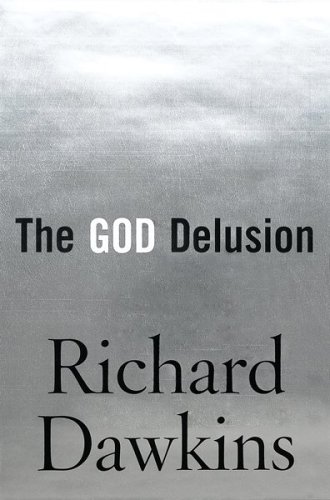
One of the points Dawkins makes in The God Delusion when the liberal theologians raise their re-interpreted Divinity is the problem with baggage. That term "God" and what it means in the minds of most believers is really very problematic.

That's what I started wondering about; my own hodge-podged theologies and why I bothered. The only divine entity[ies] that made any sense had not much in them to inspire devotion, adoration, or belief. (etc... )

The end result being the realization that I really didn't believe in the hodge-podged (or otherwise) theologies I was propping up for myself.

But, on a different level, I do so love the picking apart process. A few links on some of my pet topics: BiV's and Kiskilili's thought provoking questions about the Virgin Mary, Kiskilili's and Lynnette's dissection of Eve and the Creation, (BiV also takes on the Creation with an eye to science) and Lynnette on takes on Heavenly Mother. To make a quick segue into SF, have you read Parable of The Sower by Octavia Butler? LOVE Lauren and her earthseed religion.
There's so many others. This is just off the top of my head.

(and now it's outa my head and in print, so maybe I can be productive today....)

Monday, December 28, 2009

my god delusion

Just a few quick thoughts while I'm in the middle (pg 155) of reading Dawkin's The God Delusion; I like biology! Wow! And the cosmology stuff the Dawkin's just finished delving into, seriously, my son's favorite book to read at night one about the universe and it was freaky cool to suddenly have a few more interesting tidbits of information to impress my kindergartner with.

But when Dawkins gets into the scientific proofs about why God could absolutely not exist (ie, a being so complex as to have 'created' the universe is even more highly improbable and raises more questions than the creation of that universe in the first place and the problems with declaring God un-research-able and outside the realm of science etc etc etc ...) he sort of loses me. And I'm trying to figure out why.

Maybe it's because I see how absolutely futile his arguments would be, say, in a dinner table discussion with my family? Or maybe it's because I still have my own lingering theist/deist biases that continue color my thinking? Or maybe it's connected to Dawkin's tendency to be a bit dismissive of believers (believers making up the vast majority of my friends and family). Perhaps it's because my own loss of belief in God went through an entirely different route than pure scientific rational inquiry. Still thinking on it. And enjoying the read in the meantime.

Anyhoo... random but related, while doing a bit of reading for my last post I stumbled upon Answers in Genesis (a website Dawkins references several times in his book) and did a good amount of eye-rolling as they try to pander to a female base by raging against Darwin's sexism, because Christians are ALL about equality of the sexes, so poo poo to you Darwin. Yah. Whatever.

Thursday, December 17, 2009

xmas

The Christmas season weighs heavy on me.
It brings out all my contradictions: A joy for giving gifts fighting against a need for frugality and a resistance to the pervading sense of commercialism and obligation. A love of celebration warring with the heavy cultural Christian overtones. Conflicted feelings about my 6yr old's adamant profession of belief in Santa (though he has informed me that he DOESN'T believe in elves) and, in particular, feeling that the time investment expected for the festivities weighs heavier upon the woman in the household. (Am I nuts for thinking this? Does anyone else feel that way?)

But... as of today, the extent of our Christmas shopping/wrapping etc is finished. (I take that back, I am putting some finishing touches on a few sock monkey's for the little guy. But still, close).

So now, I'm hoping to sit back just a bit and meditate. And read. I've done some interesting reading so far, like how Christmas is, in fact a Huge Value Destroying Hurricane (which prompted me to add Scroogenomics to my reading list). Also, regarding Atheists, eat drink and be wary about the land-mine strewn war zone that the season can be for non-believers (which prompted me to add The Atheists Guide to Christmas to my reading list). (Plus I fell in love all over again with Dar William's song The Christains and The Pagans.) Most recently, I was delighted to find an intersect of commonality where a letter from an atheist was well received at the Christian Advent Conspiracy, it was encouraging to see mutual hands of friendship extended there.

Speaking of Advent Conspiracy, since their cause is drinkable water, I'd like to point you to Melinda's Christmas wish list where you can help her reach the goal of $1000 to fund clean water projects in developing nations. I like how she puts it: "I have everything I want and need.
If you want to get me something for Christmas, please donate to my campaign for this organization. You would put a real smile on my face. :)" You're awesome Melinda!

here's the promo video for Charity:Water

and here's the promo video for Advent Conspiracy


Okay, that's all. Happy Holidays!!

Friday, November 13, 2009

finding ritual.


It's been on my mind a lot, this desire to find some sort of ritual that has meaning to me.

The desire was reignited by participating in Tucson's All Souls Procession. A good amount of that event was just for fun, like dressing up for Halloween. But underneath it, was this urge for ceremony, for ritual, to use creative energy to make something to honor and commemorate someone/something who has passed on. A costume, a mask, a float for a parade. Part celebration, part closure (with a good amount of carnival thrown into the mix).


A friend just made a little alter for peace in her home. A simple thing from a cardboard box, some tin foil, a bit of paint, a few handmade objects, a few found objects (similar to these alters displayed during the Procession of Little Angels).


Another friend just had a blessingway for her upcoming birth, a powerful ceremony of womanhood.

Yet another friend shared with me the little alters she would make and put in her room, and of the little handmade talismans she would put in various parts of the house (each with their own specific meaning for the home and the family).

So this veteran's day, I decided to make something as a ritual. It was really very simple, me and my son each made a little person out of Popsicle sticks and string and fabric and other things. We joined the figures together, holding hands, a wish for peace and for our loved ones in the armed services. Then we took the figures to the El Tiradito shrine located in the historic barrio in downtown Tucson, lit a candle and left our our little peace figurines on the shrine. (I had been wanting to see it anyway, this was as good an excuse as any.)

Now here's the thing about me, and shrines, alters, prayers, blessings, etc...
I have lost the belief in there being anything mystical, or supernatural, etc about them. However, what is still very strong for me is the belief there there is still power there. We are creatures wired for ritual. We respond to it. So while I don't think these objects and actions draw out any special essence from the ether/heavens/spirit world, I DO believe these objects and actions resonate in particular ways in our own psyche's.

I mourned loosing my LDS rituals. (see here and here). Time to start finding my own.

Thursday, September 10, 2009

words about God

From two different friends, two fascinating quotes about belief in God.

From Jana:
Question with boldness even the existence of a God; because, if there be one, he must more approve of the homage of reason, than that of blind-folded fear.
~Thomas Jefferson

And from Judith:
[excerpts from THE AWAKENING By Don Marquis]
...The God that we have worshipped for a million years begins to be,
And he whom we have prayed to creates himself out of the stuff of our prayers...

For them that have desired a God create him from the stuff of that desire....

He builds himself out of the desperate faith of them that have sought him,
And his face shall be wrought of the wish to see his face....

Out of agonies and love shall God be made...

For he builds himself of the passion of martyrs,
And he is woven of the ecstasy of great lovers,
And he is wrought of the anguish of them that have greatly needed him.

[This poem is much longer but these were phrases that particularly caught me. Unfortunately, I cannot find an online version. Let me know if you find one.]

I'll have to say more later...
For now, I just wanted to put these up, frame them together, and think about them for a while.

Thursday, August 20, 2009

you say that like it's a BAD thing

[also posted at The Exponent]

Atheism- the absence of belief in the existence of deities.

At a large family dinner a few years ago, the conversation turned to the topic of one of my cousins (not present at this gathering). It had been discovered that this cousin no longer believed in the church (!!) which revelation brought about a general round of disappointed head-shaking. But that was not all, the informant continued, "he told me he no longer believes in God!" Gone was the disappointed head-shaking, in it's place was a profound sense of horror.

In my heart (a heart already secretly dealing with questions about the church) I also felt that sense of horror, my own hidden fears that I might lose God.

As manifest by the reactions of my family, the label "Atheist" is a slur, a tragedy, an almost incomprehensible failing, a fate worse than death (well, okay, maybe that's going a bit far, but you get the idea, right?)

[My trusty Webster's dictionary at home has as it's first definition of Atheism; UNGODLINESS, WICKEDNESS. ]

It always intrigues me when I see an individual address a predominately believing audience and refer to their own atheism. It doesn't happen very often. When it does, I try to speak to them about it afterward. Frequently they share the small reservation they feel about stating such a thing out loud in such a setting, there being such a negative stigma attached to the label amongst believers, but that they felt it should be included in their remarks anyways.

I, for one, am always glad they do.
Because, you see, I don't really believe in God anymore, and I'm having to confront my own reservations about admitting this to myself and my peers. (I was recently asked to give a lesson in relief society and was strongly tempted to say "Sure! But I'm atheist, do you still want me to teach the lesson?" But I didn't. I just graciously declined the invitation. Maybe someday.)

I have been delighted to discover the non-theist community is extremely diverse, full of good works, purpose, hope and joy. To discover, as Phil Zuckerman puts it, "Lack of theism does not render this world any less wondrous, lush, mystifying, or amazing."

I have an absence of belief in the existence God.

Which is very ironic because I have always been and still am a spiritual person. But it's not tragic and that's the point I'm trying to get across. There is incredible room for personal growth, for wonder and awe and profundity and mystery within the realms of non-theism. There are amazing people in this world, contributing members of society, friends, spouses, parents etc who do so much good even though they don't believe in God. (Funny isn't it, the impulse to add a caveat about how a person can be good without believing in God.)

I sort of wish I could go back in time to that family dinner and respond to the pronouncement that this cousin was atheist with something like "you say that like it's a BAD thing" and try to get a discussion going that perhaps distilled some of the negative associations with the label.
Maybe next time. :)
Meanwhile, I'll take this opportunity here, on this blog, to get a discussion going.

This is not a post to promote atheism and I want to avoid here any bashing or proselytizing of either theism or non-theism. I'm just curious what your own experiences with the label have been.

Friday, August 7, 2009

Break The Vessel

I encountered an amazing short story the other day.
Break the Vessel by Vylar Kaftan.
It is speculative fiction with some rather gruesome and erotic aspects to it, just to give you fair warning. (Also a warning, this post may give away spoilers. So read the story first if you are interested. It's not long.)

Break the Vessel in it's self is fascinating but I was particularly struck by a strong resonance between the two main characters and my own experience as a Mormon and questioning Mormonism.

On the one hand, Numa, our narrator. A ranking priest in the Temple assigned specialized duties to Sun God. Faithful, a believer, fully immersed in the the doctrines and in the role that has been assigned to him. His role is intended to make the audience recoil just a bit, we would maybe even consider it a vile disgusting duty Numa must perform. But how blessed, how honored Numa considers his lot. At several points in the story, Numa ponders the deep doctrines of his particular role, fascinated, faithful, and in awe.

So much about Numa reminds me of younger self as a member of the church. Heavily involved in service in the church, preoccupied and obsessed with the doctrines, with the spiritual. Mind oblivious to the gaps, the inconsistencies, the contradictions therein.

Then, there is Aki. A God in his mortal incarnation. With no memory of his former Glorious Divine self, but raised from birth with the knowledge that he is Aki, the Sunlord. The Chosen one with a vital role to play for his people.

But Aki comes to a point where he can no longer ignore the gaps, the inconsistencies, the contradictions.

He has questions.
A conversation between him and Numa is so familiar to me:

What if I am not a god?

What?” I ask, shocked beyond propriety.

What if there has been a mistake?

No mistake can be made.”

How do you know I am Aki?

It is faith, Sunlord.


But blind faith wasn't a satisfactory answer for Aki.

And his quest for knowledge only revealed the boundaries imposed upon God by his own Temple and High Priests.


Anyhow... It resonated. Just thought I'd share.

Saturday, May 9, 2009

Aweism [and labeling within the secular humanist community]

In the latest issue of Free Inquiry Phil Zuckerman seeks to create a new label within the Secular Humanist community: Aweism.

A brief overview of his thoughts:

"'Atheist Is Fine, But...

Of course I am an atheist; I don't believe that any of the gods that have been created by humans actually exist... But it's not [a label] I feel comfortable using when people ask me to label myself. Here's why. First off, the term is one of negation rather than affirmation... Second, the label 'atheist' doesn't adequately capture the joy of living that I often experience... I find that the self-designation of 'atheist' simply falls short....

'Agnostic' Is O.K., But...
"Is [agnosticism] really even a position? It is actually more like the absence of a position, for it entails nothing more than admitted indecisiveness or embraced fence sitting... In sympathy with the agnostic position, I believe that there are just some eternal unknowns out there. The God question is not one of them, but other questions do persist that may ultimately be unanswerable... But when I ponder the existence of certain existential questions and cosmic mysteries, I often have an emotional reaction beyond that of mere dry puzzlement or cold contemplation...

'Secular Humanist' Is Better, But...
I do find the designation of 'secular humanist' useful and appropriate now and then... [But] I find that that secular humanism is more accurately a position or agenda that I support... a set of values, ideas, and practices that I advocate... [But] when I first heard my eldest daughter's heartbeat in that small doctors office in Eugene, Oregon, I didn't feel like a 'secular humanist.' What I felt was a tearful joy and wonder...

Yes, I am an atheist. Yes I am an agnostic- at least the version that suspects that there may be limits to human knowledge. Yes, I support and advocate the sane and noble goals of secular humanism. But I am something more. I am often full of a profound feeling. And the word that comes closest to describing that profound feeling is awe...

Aweism
Aweism is the belief that existence is ultimately a beautiful mystery, that being alive is a wellspring of wonder, and that the deepest questions of life, death, time, and space are so powerful as to inspire deep feelings of joy, poignancy, and sublime awe... There are literally hundreds of words to describe the religious... and yet when we consider the labels and self-designations available to secular folk we can count them on one or two hands... We should not shy away from articulating the various shades of secularity that we may experience, for it is important to others as well as to ourselves, to accurately describe the numerous ways in which one can be godless..."

Okay, now that I have cut and spliced, sliced and diced Zuckerman's article for you, the reason it stuck out to me is that I am somewhat up in the air as far as a belief in deity is concerned and one of the reasons I have been conflicted about discarding a profession in the divine is that I experience moments of strong tangible physiological responses to certain situations that I have always associated as "Spiritual". So it was intriguing to read his thoughts (recounting experiences where he has felt things similar to what I feel) on how his "lack of theism does not render this world any less wondrous, lush, mystifying, or amazing."

Just something interesting to chew on.

Now I am curious to wait for the next issue and see the livid letters to the editor about his treatment of their various chosen labels.

Monday, March 9, 2009

the crutch and the confidence

Something that happened when I moved out of participation in the church. I lost my confidence. Of course, I was no longer getting the validation and sense of responsibility that comes from callings/teaching/etc... and for a introvert like myself who does not naturally seek out service/leadership/human contact opportunities that has noticeably reduced my sphere of influence in the world. But I noticed something else as well. I had thought I was just going explore and expand my belief system, but instead I found my belief system merely disintegrating and when that happened, I lost grace. I lost the shield that had previously softened my failings. I don't mean this in a salvation way, a "repent or your sufferings will be sore" getting-to-heaven way. I mean this in a day to day, suddenly feeling much more overwhelmed by my errors and my insignificance. By the utter inconsequence of being a human animal.

I just finished Joseph Campbell's The Power of Myth. Campbell talks quite a bit about the importance of our spiritual Myths and Rituals in giving the individual a sense of place, purpose, connection to something greater. And he's pretty clear that the literalness of these myths isn't the point, it's their ability to give humans some sense of meaning in an otherwise meaningless world. A sense of confidence.
A crutch.

I've been trying to write this post now for several weeks, and I am still no closer to having some sort of nice wrap-it-up epiphany about finding meaning, having confidence, metaphorical belief systems, etc... So I though it was about time I just hit the publish button anyways and see what your thoughts on the subject are.

Tuesday, July 8, 2008

God's Problem


Discussion of this book is taking place at the Exponent. For more about the book, Dave Banack of Times and Seasons reviewed it, as did Chris Hedges of the Harvard Divinity School. You can also read and/or listen to the NPR interview with author Bart Ehrman.


God’s Problem is about Bart Ehrman’s problem reconciling a belief in an all powerful, all loving, actively involved God with the reality of the enormous suffering in this world. The book is extensive in its scope, and I find myself scanning my notes (several pages worth) and not even knowing where to begin. There are his textual criticisms of the various biblical passages where he contests authorship and origin, there are his extensive explanations of the various biblical answers given, and of course, there are his logic-driven rebuffs to those answers.
In tackling this problem of suffering, Ehrman did an excruciating job of detailing what is meant by that word, giving us gut-wrenching reality checks, the numbers and visuals of ‘suffering’ (i.e., 11 million dead in the Holocaust, 2 million dead at the hands of the Khmer Rouge in Cambodia, 30 million dead from the 1918 flu epidemic, every minute five people die of malaria, every minute 25 people die of water-related health problems, every five seconds a child dies of starvation, etc, etc, etc…). This book was not just about personal trials and learning experiences, he is talking about the extremities of human suffering that are prevalent throughout the course of human history. Those billions living in pain and dying in horrific ways, was it because they had sinned? Or as a test of faith? Or because of cosmic forces of evil?
God’s Problem brought up all sorts of emotions, challenged many of my assumptions, and left me with more questions than answers. His scriptural knowledge is impressive (I am also enjoying his book Misquoting Jesus), the contradicting explanations for suffering that he writes about have been on my mind a lot lately and his crisis of faith is one that I understand very well. I did find myself occasionally frustrated by the rigidity with which he held to an all-or-nothing view of the bible’s explanation of God. While rejecting the conservative Christian view of the bible as the literal word of God he still stubbornly refuses interpretations that are not solidly rooted in the bible. For example, Jesus as divine and suffering on our behalf, or a God that is less-than omnipotent, or an eternal reward in heaven… those are all concepts that he finds attractive, but not substantiated by enough biblical authors to be in consideration as answers; “…for a biblical scholar like me, I have to admit that it still seems problematic.” (pg 272.) I also found his ‘solution’ in the last few pages to be simplistic and shallow. However, given that the point of God’s Problem is to show how the bible explains suffering, once can hardly fault Ehrman for being rigid with what it says, or for not going beyond the scope of the book by expounding upon how we can alleviate suffering (a complex topic all of it’s own.)
This was a fascinating read, and I can’t wait to hear what you thought of it.

What parts of this book stuck out to you the most?
What arguments did you agree with? Which did you disagree with? And why?
Anyone up to challenging or expanding upon Ehrman’s textual criticism of the biblical authors?
What are examples of LDS scripture and doctrine on suffering, and how do they correspond to the biblical answers Ehrman talks about? Do they shed additional light on the subject?
And, of course, feel free to add anything else you’d like to share about the book or the topic.

(By the way, reading this book made me very excited to begin our next book, Take This Bread, which will be introduced in a few days. Sara Miles, raised an atheist, doesn’t have Ehrman’s burden of ‘biblical scholarship’ and as such finds a powerful interpretation of divinity in the bible, as well as a personal calling to help alleviate suffering in her community.)